
Brush Clearing in Lancaster, SC: Fence Lines, Lanes & Invasives
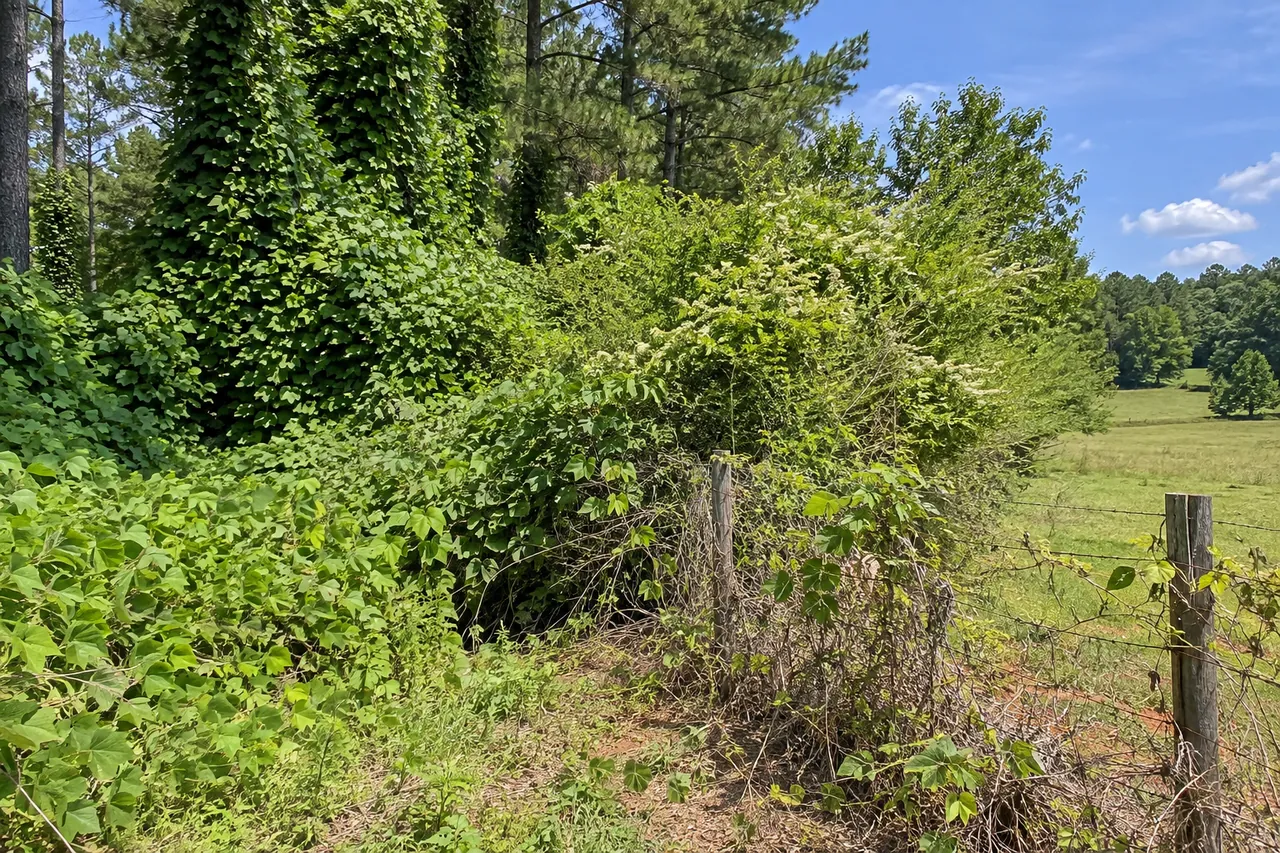
Brush clearing in Lancaster County covers a lot of different jobs: thick underbrush beneath pines and hardwoods, property lines and fence rows that disappeared years ago, hunting lanes and food plots, and woods edges swallowed by privet, honeysuckle, and kudzu. Here's how each is usually handled, what comes back afterward and how to keep it down, what it costs, and when town or county rules come into it.
The usual brush jobs
- Underbrushing woods. Taking out the saplings, vines, and shrubs under a stand of pines or hardwoods and leaving the canopy. It opens the woods up for walking, hunting, and seeing your own land.
- Property lines and fence rows. Reopening a line so it can be walked, surveyed, or fenced again.
- Woods edges along pastures and yards, where brush keeps creeping outward.
- Hunting lanes, shooting lanes, and food plots. Narrow strips and small openings mulched through thick cover.
- Around buildings, to get brush and vines back from a barn, a shed, or the house.
Which machine fits
Small areas close to a house usually go to a crew with saws and a chipper. A tractor with a bush hog handles briars and saplings in open ground. For anything thicker, especially on a slope or in the woods, a forestry mulcher grinds brush and small trees where they stand and leaves the roots in the clay, which matters on ground where bare soil washes. An excavator with a thumb can pull out shrubs by the roots where you want them gone for good, at the cost of disturbed soil.
Fence lines and property lines
A fence row is where brush gets its start. Birds sit on the wire, and the Forestry Commission notes that "Privet is widely disseminated by many birds and other wildlife species that consume the fruit." Give it a decade and the wire disappears into privet, cedar, and honeysuckle.
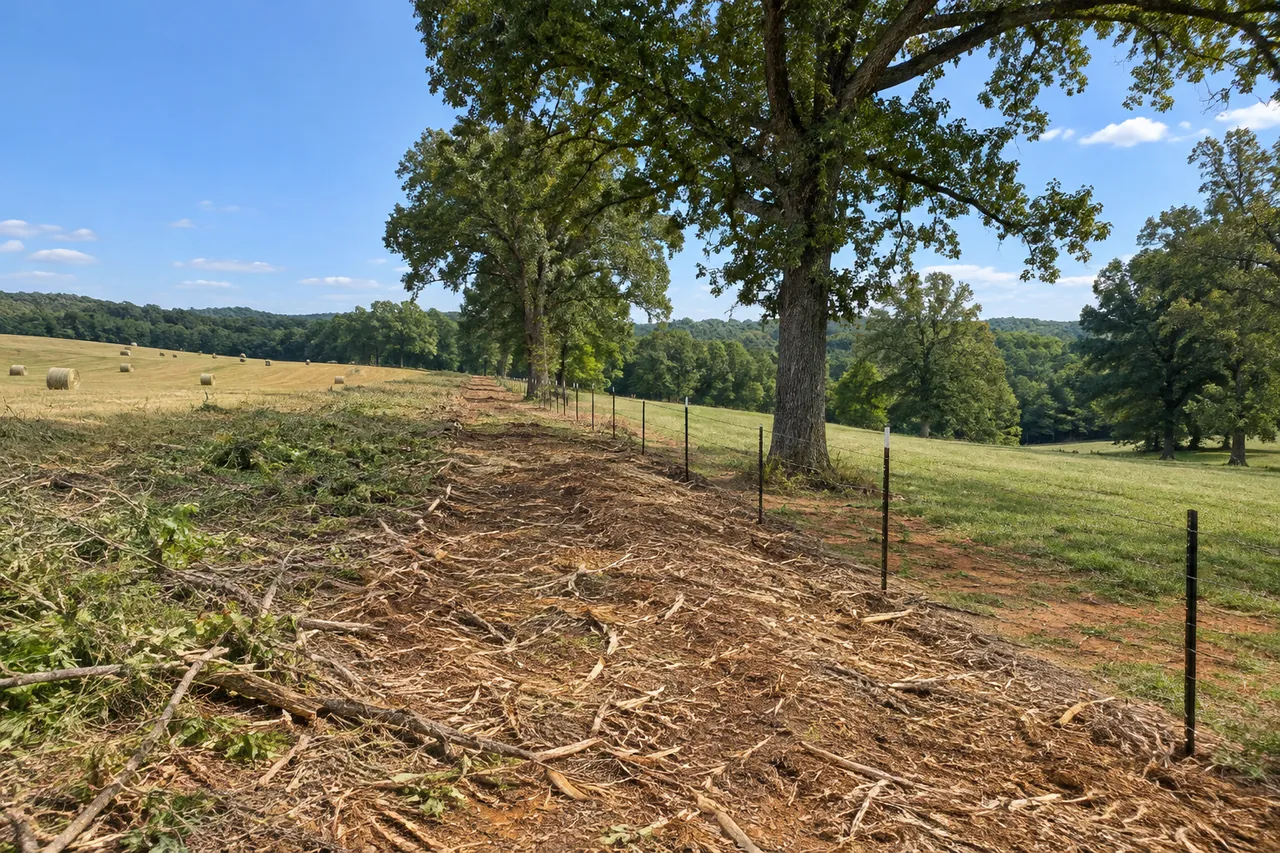
A mulcher can open a strip along each side of the wire and leave chosen trees standing. Before it starts, mark old wire, buried posts, and wire grown into trees, and settle which side of a boundary line the work stays on. If you're not sure where the line is, have it surveyed first; a cleared strip on the neighbor's side is hard to take back.
Invasive thickets
The Forestry Commission's guide to invasive species in South Carolina forests covers several plants that turn up in brush jobs: Chinese, European, and Japanese privet, Japanese honeysuckle, chinaberry, mimosa, Bradford (Callery) pear, multiflora rose, autumn olive, tree of heaven, and Chinese wisteria. Kudzu isn't in that publication; for a kudzu patch, ask the Clemson Extension office in Lancaster (803-283-3302) for a control plan before you pay for clearing.
Cutting is only half of it. Birds keep spreading seed and cut hardwoods resprout, so count on follow-up visits after the first clearing. Ask the contractor whether they treat cut stumps as they go, and plan a second visit.
What grows back, and how to keep it down
Native hardwoods resprout too. The U.S. Forest Service's silvics guides say red maple "stumps sprout vigorously," with some sprouts growing 3 feet or more the first year, and sweetgum comes back from root sprouts. Follow-up usually means mowing or mulching the regrowth once or twice a year at first, spot herbicide on the worst species, or, on pasture, grazing. NRCS's South Carolina payment schedule for FY26 lists Brush Management (practice 314) scenarios for both mechanical and chemical control, so farm and forest owners can ask NRCS about cost-share (State Office, 803-253-3935).
Hunting land and food plots
Lanes and plots are a good fit for mulching: the machine can cut a winding lane through a pine stand or open a half-acre plot and leave the woods around it alone. If a plot will be disked and planted, the stumps in it need to be ground low or pulled. For habitat planning, the Clemson Extension area forestry and wildlife agent is at 803-572-8491, and NRCS has a practice standard for Early Successional Habitat Development and Management (647).
Rules that can apply
- Farm and forest land. State law exempts land disturbing on agricultural land and forestry work from its sediment rules (§ 48-14-40).
- Stream buffers. The county's development ordinance keeps buffers along streams, ponds, and the Catawba and Lynches rivers in natural vegetation, but it specifically allows "Removal of invasive species." Keep the soil undisturbed there and ask Planning (803-285-6005) if you're developing the land.
- City of Lancaster. Home lots with one or two dwellings are exempt from the city's appearance code. On other land, clearing more than a quarter of the vegetation on an acre within five years needs the building official's approval, but thinning brush and excess trees is allowed. City, 803-283-2489.
- Van Wyck. The town adds its own buffers of at least 20 feet along perennial streams and wetlands and also adopts the county's buffer rules, and its tree permits exclude house lots and farm and forest land. Town, 803-712-4993.
- Burning the brush. Outside town limits, call the Forestry Commission (1-800-705-8610) first. Yard trimmings burned at a home must be at least 35 feet from structures and 50 feet from the property line under county ordinance; brush from clearing land falls under the SC DES land-clearing rules (1,000 feet from public roads, fires started between 9 a.m. and 3 p.m.) and the county's May-through-September ban, except on certain rural-zoned parcels. Burning land clearing debris has the rest.
What brush clearing costs
Brush work is often billed by the hour. In HomeAdvisor's national forestry mulching guide (updated June 2026), light growth of saplings and underbrush runs $125 to $200 per hour, the thickest brush $200 to $400 per hour, and a full acre $400 to $1,500. Angi's land clearing guide (updated September 2026) puts typical clearing rates at $110 to $250 an hour nationally.
A worked example. A quarter mile of fence row is 1,320 feet. Clearing a 15-foot strip along it covers 19,800 square feet, a little under half an acre (our arithmetic). A contractor will price it by how thick the row is and how much old wire is buried in it, so the per-acre figures above are only a rough check. They're national averages; the figure to plan on is the one a contractor gives you after walking that fence row. More on cost.
Brush clearing questions
Can the brush come out without taking the big trees?
Yes. That's what underbrushing is. Flag the trees you want kept, and ask the operator to stay off their roots on wet days.
Will the privet come back?
Expect some. Birds keep bringing privet seed, and the hardwoods cut along with it resprout. A follow-up visit the next growing season, mowing or spot treatment, is what makes the first clearing last.
Do I need a permit to clear brush on my land?
Usually not for brush on farm or forest land outside town. Inside the City of Lancaster or Van Wyck, or along a stream on land being developed, check first. The permits guide lists who to call.
Is mulch better than piling and burning?
Often. Mulch stays put and protects the soil, and it skips the burn rules and the smoke. Piles make sense where there's room, the distances work, and the season allows it.
How we help
Call or send a short request with where the land is, what kind of brush it is, and roughly how much. We connect you with one independent contractor who does brush clearing in your part of Lancaster County. They walk it and give you a quote, and you decide. There's no charge for the referral.
Want a local contractor to walk your land?
Call or send a short request. There's no charge for the referral.