
Land Clearing Cost in Lancaster, SC
What does land clearing cost in Lancaster County? National guides put it anywhere from a few hundred dollars an acre to several thousand, and where your land lands depends on what's growing, whether the stumps come out, how steep and wet the clay is, and what happens to the brush. Below are the published figures with their sources and dates, the things that move a job up or down here, how quotes are built, and ways to spend less. None of these figures is a Lancaster County price.
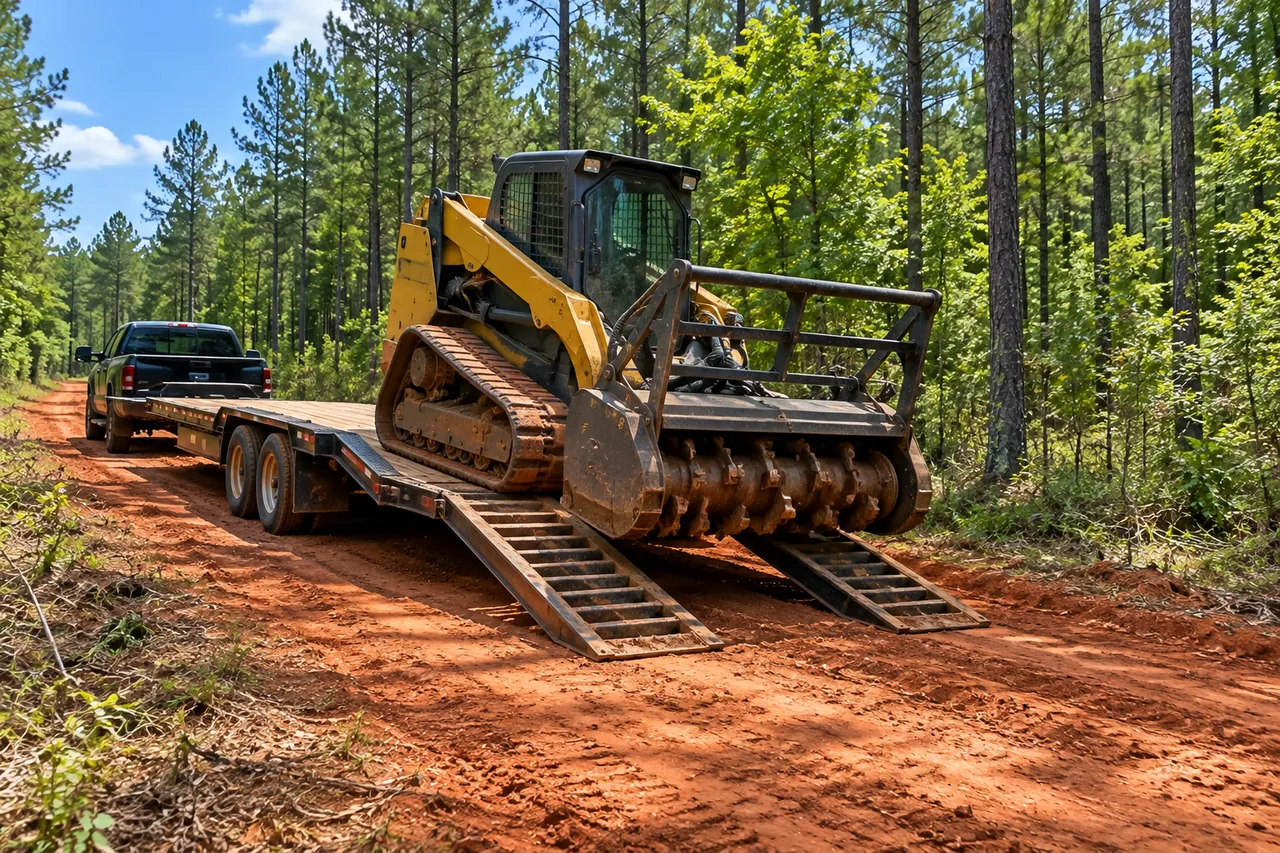
Published figures
All of these are national figures from the guides named, with the month each page was last updated. Angi's state-by-state table has no South Carolina row.
| Job | Published figure | Source |
|---|---|---|
| Average land clearing project | $3,778; most pay $1,396 to $6,174 | Angi, Sept. 2026 |
| Land clearing, per acre | $500 to $5,600 | Angi, Sept. 2026 |
| One lightly forested acre | $500 to $2,000 | Angi, Sept. 2026 |
| One densely forested acre | $3,600 to $5,600 | Angi, Sept. 2026 |
| Quarter acre, lightly wooded or heavily forested | $125 to $500, or $750 to $1,400 | HomeAdvisor, June 2026 |
| Clearing crew, per hour | $110 to $250 | Angi, Sept. 2026 |
| Forestry mulching, per acre | $400 to $1,500 (U.S. average $500) | HomeAdvisor, June 2026 |
| Forestry mulching, per acre | $1,000 to $2,500 (average project $2,000) | Angi, May 2026 |
| Forestry mulching, per hour | $125 to $200 for underbrush; $150 to $300 with grading; $200 to $400 for heavy, dense brush | HomeAdvisor, June 2026 |
| Forestry mulching, per hour | $150 to $300 | Angi, May 2026 |
| Stump grinding | $250 average; $2 to $5 per inch of diameter; $100 to $150 minimum; $40 to $75 per added stump | HomeAdvisor, June 2026 |
Two official fees can land on a clearing job here: SC DES's $150 septic site evaluation, and, where state stormwater coverage is needed, a $125 review fee plus $10 per tenth of an acre, up to $2,125 (DES fee page).
What moves a Lancaster County job up or down
- What's growing. An old field of broomsedge and pine saplings is quick work; a hardwood draw with big white oaks and yellow-poplars is not.
- Slope and wet clay. The county's rolling Slate Belt ground means slopes, and red clay turns to sticky mud after rain. Machines that sit out wet days, and silt fence on the downhill side, are part of the price.
- Stumps. Cutting low and mulching leaves roots in the ground; grubbing a house site pulls them out, which takes far longer.
- Debris. Land-clearing burns need 1,000 feet from public roads, and the county bans them May through September except on certain rural parcels. When burning is out, the brush gets mulched, ground, or hauled, and hauling adds trucking and disposal.
- Creeks. Work near Flat Creek, Gills Creek, the Lynches River, or any stream with a buffer goes slower and more carefully.
- Access. A gate the trailer can't swing through, a soft farm road, or a creek crossing between the road and the work all add time.
- Size and travel. Moving a machine to your land is a fixed cost whether it works one acre or ten, which makes small jobs pricier per acre.
- Timber. Merchantable pine or hardwood on a bigger tract can offset some of the cost if it's sold first. The Forestry Commission's "Before you sell your timber" page is a good start.
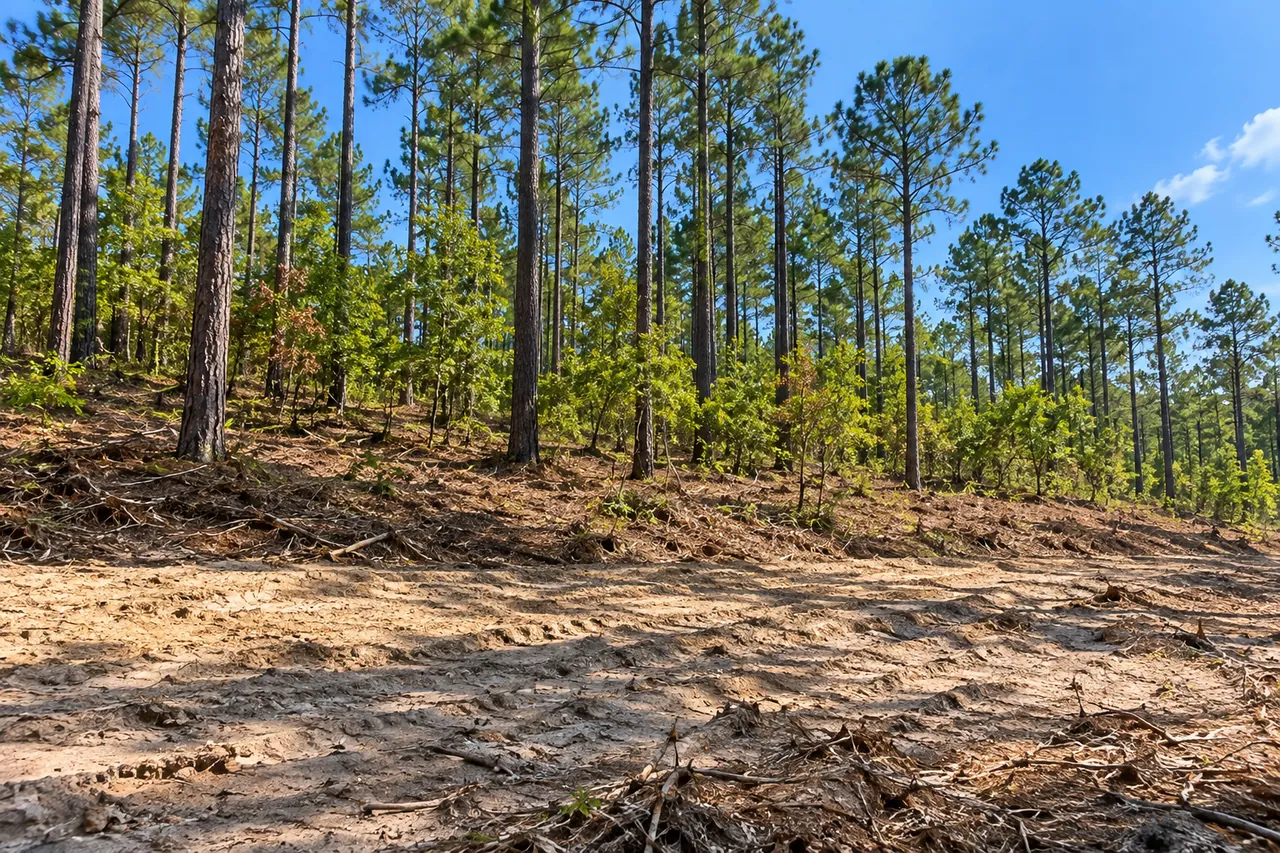
Ground changes the job, too. Through most of the county the soil under the leaves is red or orange clay with slate chips; toward Kershaw, where the Piedmont meets the Sandhills, it turns to loose gray-tan sand over sandy clay. Ask the contractor how your soil affects timing, traction, and erosion control.
Per acre, per day, or per hour?
Each pricing method puts the risk in a different place. A per-acre price is fixed once agreed, so the contractor carries the risk of thicker growth than expected; it's easy to compare, as long as both quotes cover the same acres and the same work. A day rate buys a machine and operator for a day, and if the job runs into a second day, you pay for it. An hourly rate suits small or hard-to-judge work, like a single fence row or a few lanes.
A worked example. At Angi's national mulching rate of $150 to $300 an hour, an 8-hour machine day comes to $1,200 to $2,400 (our arithmetic). If one contractor quotes by the acre and another by the day, ask the second how many days they expect, and compare on that.
What a written quote should cover
- The work area on a map or flagged on the ground, and what's left out: keeper trees, the drainfield area, stream zones, fences.
- The method for each part: mulch, cut and grub, or root rake.
- What happens to stumps (left low, ground below grade, or dug out) and to the debris (mulched, ground, hauled, or burned, and who notifies the Forestry Commission).
- Silt fence, straw, and seed, and whether they're included.
- Who files any SC DES stormwater notice and who calls SC811.
- The expected number of days, the rate for extra time, and the plan for wet weather.
- The payment schedule, and a certificate of liability insurance from the contractor's insurer. Who clears land covers licenses and contracts.
Ways to spend less
- Grub only what you'll build on and mulch the rest.
- Catch old fields early, before saplings turn into trees.
- Sell merchantable timber first, with a written timber sale contract.
- Look at cost-share before you start. The Forestry Commission's programs reimburse part of site preparation and planting for new pine stands, and NRCS has programs for brush management and pasture planting. The Commission says not to start work before approval, and it's worth asking NRCS the same. See clearing after logging and pastures and old fields.
- Wait for dry ground. A week of rain on red clay can mean ruts, repairs, and extra days.
- Keep the firewood, and leave stumps where nothing will be built or mowed.
- Share the trip. If a neighbor down the road needs clearing too, one move-in can serve both jobs.
Cost questions
How much does it cost to clear an acre in Lancaster County?
Angi's national guide (September 2026) gives $500 to $2,000 for an acre of light woods and $3,600 to $5,600 for an acre of dense forest; its forestry mulching guide (May 2026) gives $1,000 to $2,500 an acre. Where a particular acre lands depends on the growth, the slope, the stumps, and the debris. A contractor who walks it can give you a firm number.
Is there a minimum charge?
Usually. Getting a machine to the land costs the same whether it works an hour or a week. HomeAdvisor (June 2026) notes that many contractors charge a minimum of $100 to $150 for a single stump.
Why are my two quotes so different?
Line them up item by item. Often one includes grubbing, hauling, or seeding that the other leaves out, or assumes a different number of days.
Does cost-share pay for land clearing?
Not for clearing as such in NRCS's South Carolina FY26 payment schedule, which leaves out Land Clearing (460). Brush management, pasture planting, and forestry site preparation are different, so ask before you start.
How we help
Want a real number for your land? Call or send a short request. We pass it to one independent contractor who works in your part of Lancaster County, they walk the property and put their price in writing, and you decide from there. There's no charge for the referral.
Want a local contractor to walk your land?
Call or send a short request. There's no charge for the referral.